TelescopesStart here
Stargazing Gear for Beginners: What to Buy First, and in What Order
A beginner's path through stargazing gear: eyes and a chart, binoculars, a first telescope, then upgrades and smart telescopes, with sourced specs.
We earn from qualifying purchases through links on this page. How we make money.
On this page
- What gear do you need to start stargazing?
- Binoculars: the first instrument
- Telescopes: aperture first, then the mount
- Upgrades: eyepieces, Barlow lenses and filters
- Smart telescopes and astrophotography
- Charts, apps and books
- What should you bring for a night of stargazing?
- Which page should you read next?
Start with your eyes, a star chart and a pair of 7x35 to 10x50 binoculars, the range NASA’s Night Sky Network suggests for a first instrument. Add a telescope once you can find a few constellations: a Dobsonian reflector for the most aperture per dollar, or a small refractor if it has to live in a closet.
Sun safety
Never point a telescope, binoculars, a finder scope or a camera at the Sun without a special-purpose solar filter secured over the front of the optics. NASA says viewing the Sun through unfiltered optics “will instantly cause severe eye injury”, and that eclipse glasses must never be used with a telescope, binoculars or a camera. The American Astronomical Society adds that a finder scope must be capped, removed or filtered too, and that solar filters made to thread into an eyepiece are dangerous.
What gear do you need to start stargazing?
Very little. NASA’s skywatching FAQ says you do not need any special equipment to get started. Gear earns its place one step at a time, and each step below is a rung on the same ladder.
- Naked eye and a chart. Learn a handful of constellations with a planisphere or a sky app. The Springfield Telescope Makers, the club behind the Stellafane convention, call a planisphere “the best way for a beginner to learn the sky”.
- Binoculars. A 7x35 to 10x50 pair shows the Moon, the Pleiades star cluster and, from dark skies, the Andromeda Galaxy and the Orion Nebula, according to NASA’s Night Sky Network.
- A first telescope. Pick by aperture (the diameter of the main lens or mirror) and by how far you have to carry it. The beginner telescope guide sorts the choices by budget band and by sky.
- Upgrades. An extra eyepiece, a Barlow lens and a Moon filter come after a few nights out, when you know what is missing.
- Smart telescopes and imaging. A smart telescope or a star tracker is for people who want pictures, which is a separate hobby with its own gear.
Skipping rungs is allowed. The order matters because each rung teaches the skill the next one needs: binoculars teach you where things are, and a manual telescope teaches you how to find them.
Binoculars: the first instrument
NASA’s Night Sky Network explains the numbers on a pair: the first is the magnification and the second is the lens diameter in millimeters. A 10x50 magnifies ten times through 50 mm lenses. It advises against going beyond 10x50 at first, because bigger pairs are heavier and harder to hold steady without a tripod.
Binoculars reach further than most people expect. The Astronomical League runs a Binocular Messier Observing Program that asks observers to find 50 of the 110 Messier objects (star clusters, nebulae and galaxies) with binoculars alone, and it recommends lenses between 20 mm and 80 mm.
The binoculars for stargazing guide covers 10x50, 15x70 and 25x70 sizes and when a tripod adapter becomes necessary.
Astronomy binoculars: 10x50 and larger
Shop the range
Browse current binoculars for stargazing on eBay.
Shop binoculars for stargazingOpens eBay in a new tab. Check condition, seller feedback and returns on the listing.
Current eBay listings for binoculars for stargazing, shown by eBay
Telescopes: aperture first, then the mount
Astronomer Andrew Fraknoi’s 2025 buying guide names aperture as the key characteristic of a telescope: the larger it is, the more light the telescope gathers and the fainter the objects it shows. The same guide says magnification is not a criterion for choosing one, because you change it by swapping eyepieces. Celestron puts the ceiling at 50 to 60 times the aperture in inches under ideal conditions.
The mount decides whether you enjoy using it. Fraknoi calls the mount one of a telescope’s most critical elements, since a small vibration moves the target out of a narrow field of view.
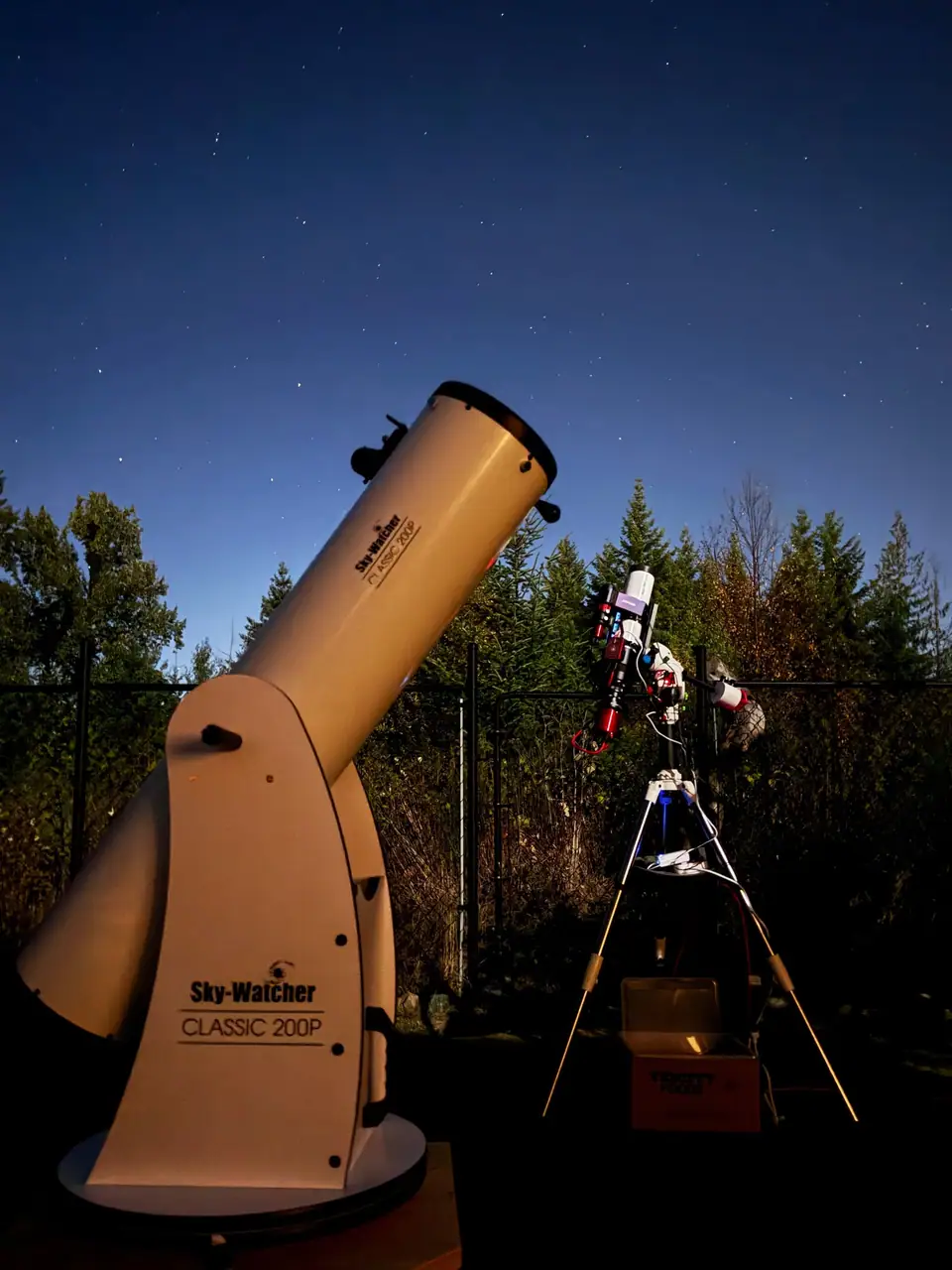
Two designs suit a first purchase. The Smithsonian National Air and Space Museum describes the Dobsonian as a popular first telescope, offering large diameters for relatively low prices on a base that is simple to point. It is also bulky: Celestron lists its StarSense Explorer 8-inch Dobsonian at 43.4 lb for the kit, split into a 20.6 lb tube and a 22.8 lb base. A small refractor is far lighter. Celestron’s StarSense Explorer LT 80AZ, an 80 mm refractor on a tripod, is listed at 9.2 lb.
Where to go next:
- Dobsonian telescopes, 6-inch against 8-inch, with weights and what each size shows.
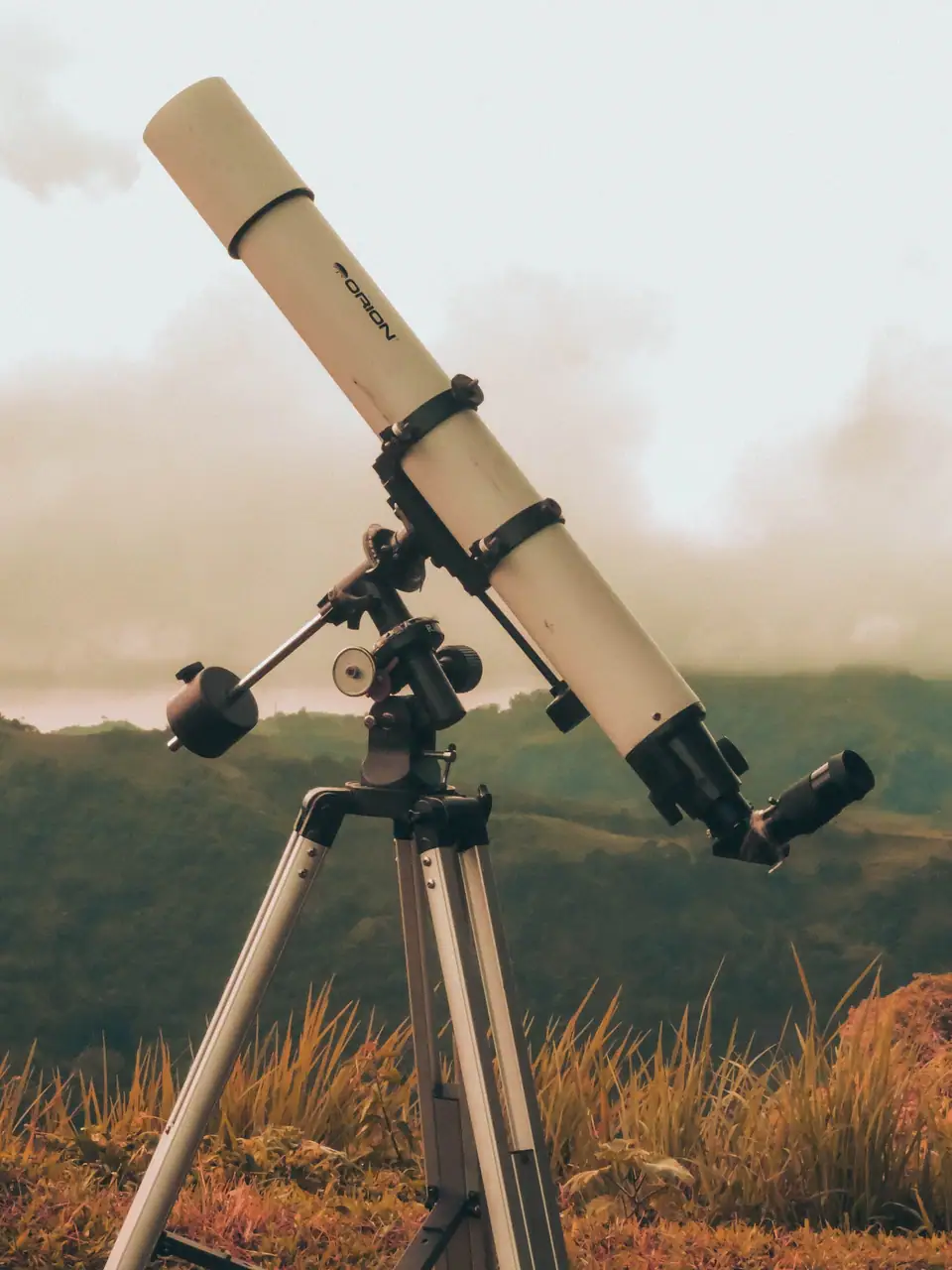
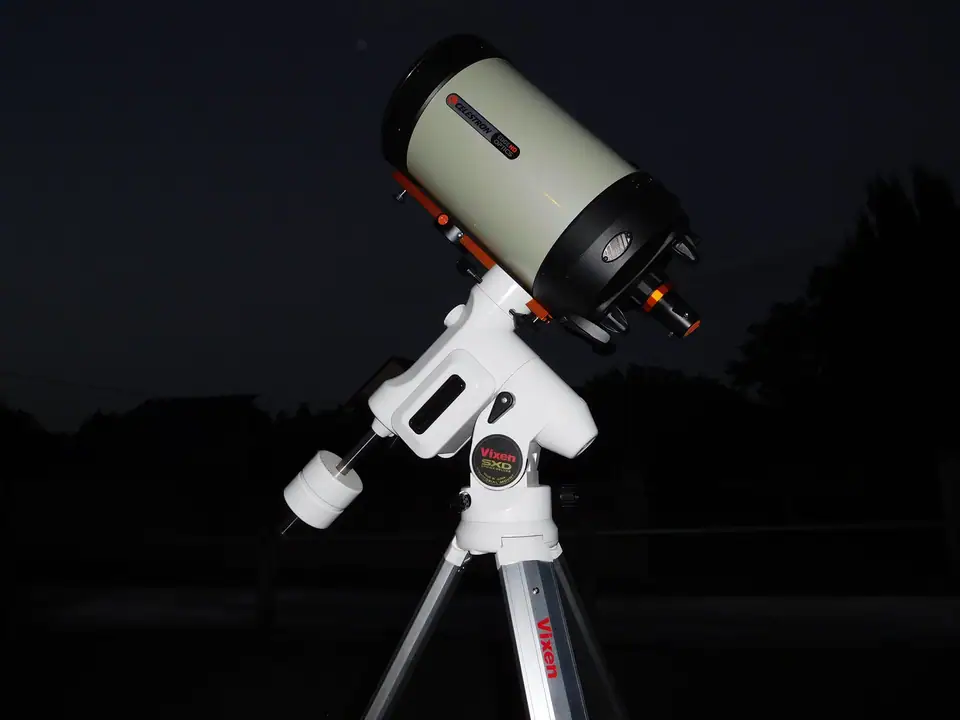
- Refractor, reflector and Schmidt-Cassegrain designs compared.
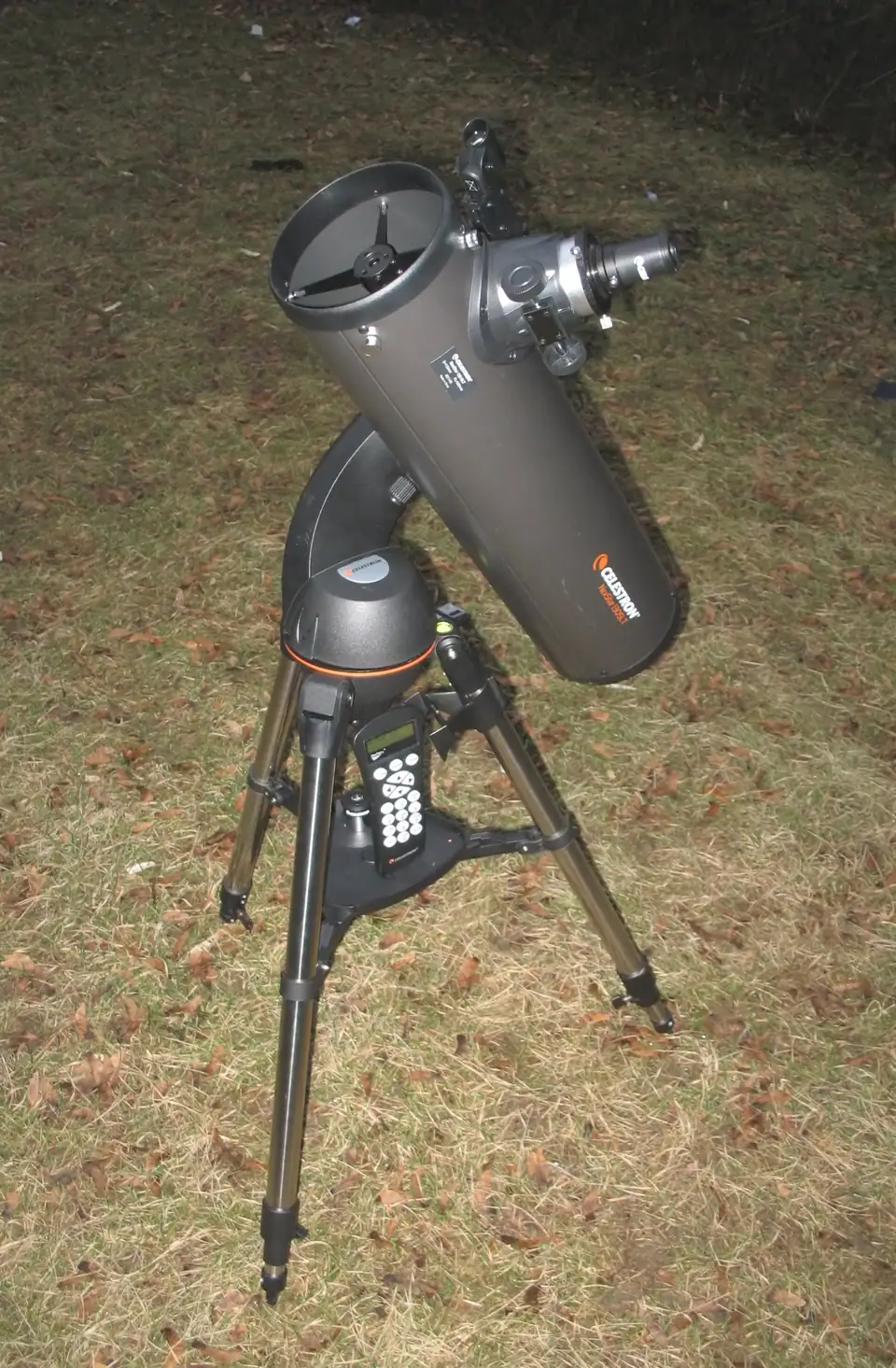
- Celestron NexStar and StarSense Explorer GoTo telescopes, for a telescope that finds targets for you.
- Telescopes for kids, with age bands and the safety labels to read.
- Buying a used telescope, including what to check before you pay.
Beginner telescopes: small refractors and tabletop reflectors
Shop the range
Browse current beginner telescopes on eBay.
Shop beginner telescopesOpens eBay in a new tab. Check condition, seller feedback and returns on the listing.
Current eBay listings for beginner telescopes, shown by eBay
Upgrades: eyepieces, Barlow lenses and filters
Magnification is the telescope’s focal length divided by the eyepiece’s focal length, as Celestron’s knowledge base explains. A 1000 mm telescope with a 20 mm eyepiece gives 50x, and a 10 mm eyepiece gives 100x. That is why the first upgrade is usually another eyepiece, not another telescope.
Celestron adds that most observing is done at low power, 6 to 25 times the aperture in inches, where the view is brighter and crisper. The eyepieces, Barlow lenses and filters guide sets out what to add first, and it covers solar filters under the rules in the Sun safety box above.
Smart telescopes and astrophotography
Fraknoi’s guide describes smartscopes as telescopes with computers inside that stack images, producing longer-exposure views that the eye at a regular eyepiece cannot match. You watch the picture build on a phone or tablet. The guide also notes that long-exposure photography with a regular telescope needs a drive that turns the telescope to follow Earth’s rotation.
Both routes are covered on their own pages: smart telescopes compared for the all-in-one units, and astrophotography gear for beginners for star trackers, cameras and mounts.
Charts, apps and books
A planisphere is a rotating star chart you set to the date and time. It needs no battery and no signal, and it does not spoil your night vision the way a bright phone screen does. NASA’s skywatching FAQ recommends sky apps for checking what is visible from your location; the National Park Service suggests switching a phone to a red or night mode before you open one.
Two long-running guidebooks are worth knowing by name:
- NightWatch: A Practical Guide to Viewing the Universe, by Terence Dickinson, published by Firefly Books. Space.com reported that a fifth edition, revised by Ken Hewitt-White, was due for release on September 7, 2023. Its seasonal star charts pair a simulation of the whole sky with a facing identification chart.
- Turn Left at Orion, by Guy Consolmagno of the Vatican Observatory and Dan M. Davis of Stony Brook University, published by Cambridge University Press. Its subtitle promises hundreds of night sky objects to see in a home telescope and how to find them. The fifth edition is a 256-page spiral-bound book that lies flat on a table outdoors.
Planispheres, star atlases and observing guidebooks
Shop the range
Browse current star charts, atlases and books on eBay.
Shop star charts, atlases and booksOpens eBay in a new tab. Check condition, seller feedback and returns on the listing.
Current eBay listings for star charts, atlases and books, shown by eBay
Any of these makes a low-risk present, and the stargazing gifts guide matches books, binoculars and projectors to the person receiving them.
What should you bring for a night of stargazing?
The National Park Service publishes stargazing advice for its parks. Drawing on its Joshua Tree and City of Rocks pages:
- A red flashlight or headlamp. Joshua Tree’s page says the eye needs 20 to 30 minutes to fully adjust to the dark, and white light resets it.
- Extra warm layers, because temperatures drop quickly after sunset.
- A chair or blanket, plus food and water.
- Closed-toe shoes, and a red-light check of the ground for hazards before you settle in.
- A friend or family member.
Dress for the cold. Standing still at a telescope is colder than walking. Heated gloves, heated socks and hand warmers are covered on our sister site, Winter Storm Gear.
Pick a legal, safe spot
NASA’s guide to finding stargazing places says to make sure you are allowed to be at the location at night, to stay off private land, and to know the rules and hours of access. It suggests scouting in daylight for hazards and safe parking. Park rules differ: Joshua Tree closes its day-use areas from dusk to dawn.
Darker skies show more. NASA says getting 20 to 30 miles beyond city limits makes a clear difference, and that nights near the new Moon are best for faint objects. DarkSky International certifies parks and communities that protect their night skies as International Dark Sky Places, and its website lists them.
Which page should you read next?
If you have nothing yet, read the binoculars guide first, then the beginner telescope guide. If a child is the observer, go to telescopes for kids. If pictures are the goal, start with smart telescopes.
Frequently asked questions
What should I buy first for stargazing?
A star chart or planisphere and a pair of binoculars. NASA's Night Sky Network suggests binoculars from 7x35 to 10x50 as a first instrument because they are easy to use and more versatile than most telescopes.
What should I bring for a night of stargazing?
National Park Service stargazing pages list a red flashlight, extra warm layers, a chair or blanket, food and water, and a star chart or sky app. They also suggest bringing a friend or family member.
Do I need a telescope to start stargazing?
No. NASA's skywatching FAQ says you do not need any special equipment to get started. It adds that binoculars or a small telescope show finer details such as Jupiter's large moons, Saturn's rings, star clusters and double stars.
What kind of telescope is good for a beginner?
The Smithsonian National Air and Space Museum calls the Dobsonian a popular first telescope, with large diameters for relatively low prices and a mount that is simple to point. A small refractor on a steady tripod is the lighter choice.
How long do eyes take to adjust to the dark?
Joshua Tree National Park's stargazing page says the human eye takes 20 to 30 minutes to fully adjust to very low light. White flashlights and phone screens undo that, which is why observers use red light.
Is a smart telescope a good first telescope?
It is a different tool. Astronomer Andrew Fraknoi's 2025 buying guide describes smartscopes as telescopes with computers inside that stack images into longer-exposure views, so you look at a screen instead of an eyepiece.
Sources
- Eclipse Viewing SafetyNASA
- Solar Filters for Optics: Telescopes, Binoculars & CamerasAmerican Astronomical Society
- Binoculars: A Great First TelescopeNASA Night Sky Network
- Skywatching FAQNASA
- How to Find Good Places to StargazeNASA
- Tips for Telescope Buying (Shauna Edson, December 20, 2015)Smithsonian National Air and Space Museum
- A Buying Guide for a First Telescope (Andrew Fraknoi, 2025)Andrew Fraknoi
- What is magnification/power as it pertains to telescopes?Celestron
- StarSense Explorer 8-inch Dobsonian Telescope: specificationsCelestron
- StarSense Explorer LT 80AZ: specificationsCelestron
- Beginners Page: Getting StartedSpringfield Telescope Makers (Stellafane)
- Binocular Messier Observing ProgramAstronomical League
- Turn Left at Orion: Hundreds of Night Sky Objects to See in a Home Telescope and How to Find ThemCambridge University Press
- Turn Left at Orion, fifth edition (bookseller listing: 256 pages, spiral bound)Ripon Bookstore
- 'NightWatch' stargazing guide scores a brand-new updated edition for 2023Space.com
- Stargazing (Joshua Tree National Park)National Park Service
- Explore the Night Sky (City of Rocks National Reserve)National Park Service
- International Dark Sky PlacesDarkSky International
Filed under Telescopes
Next rungs on the ladder
Roundup
Telescopes for Beginners: What to Buy First, by Budget and Sky
How to choose a first telescope by budget band and by sky: aperture explained, what each size shows according to NASA, and maker weights to check.
Buying guide
Buying a Used Telescope: What to Check, Fair Makers and Red Flags
A checklist for buying a used telescope: optics, mirror coatings, mount, missing parts, shipping damage, eBay condition terms and the status of Meade and Orion.
Comparison
Celestron NexStar 4SE, 6SE and 8SE vs StarSense Explorer Compared
NexStar 4SE, 6SE and 8SE against the StarSense Explorer DX 130AZ: aperture, focal length, mount, alignment, power and weight from Celestron's own pages.
Buying guide
Dobsonian Telescopes: 6-Inch vs 8-Inch and What You Will See
How a Dobsonian works, 6-inch vs 8-inch by maker specs for size and weight, tabletop models, collimation basics and what each aperture shows.